
Oregon Tradeswomen
Building confidence, community, and careers: How Oregon Tradeswomen helps women thrive in the skilled trades
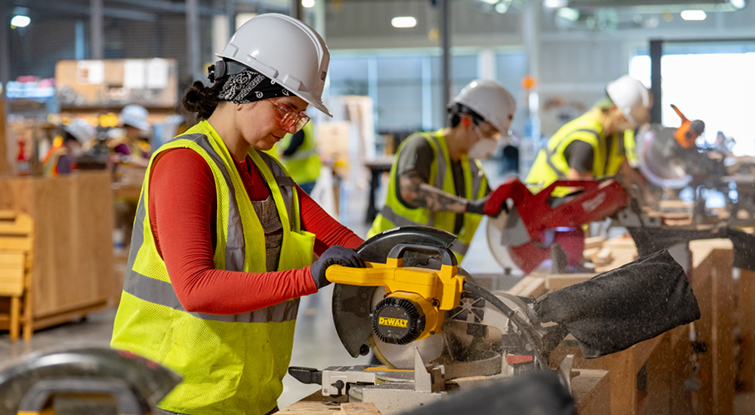
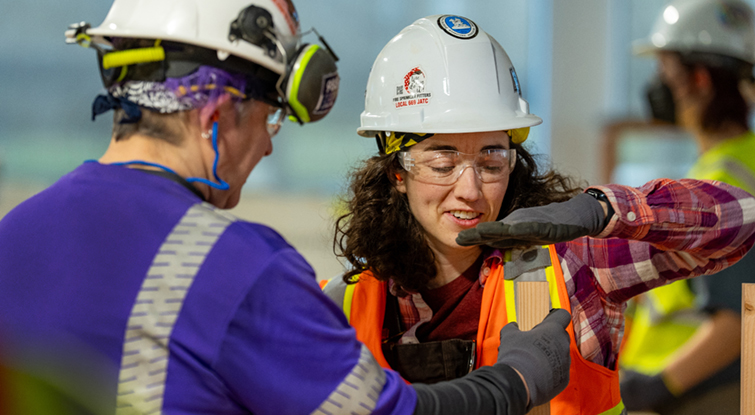
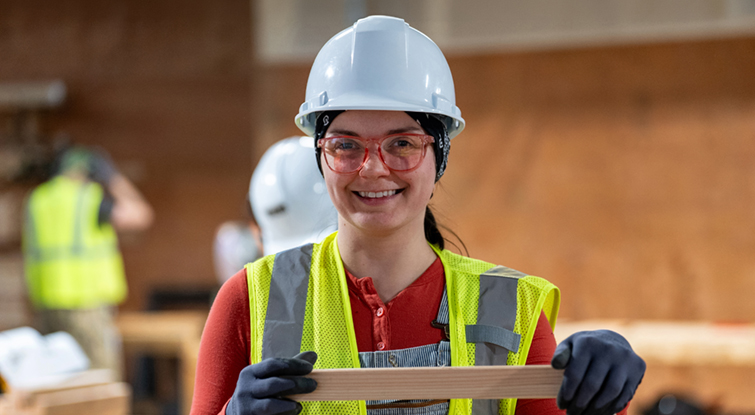
For Women’s History Month, we often celebrate the trailblazers—the women who step into spaces where they weren’t always welcome and carve out paths for those who follow. In Oregon’s skilled trades, that ongoing story of courage, curiosity, and transformation is embodied every day in the women who come through Oregon Tradeswomen’s doors.
The organization’s mission is simple but powerful: help women build economic independence and a sense of belonging in an industry still largely dominated by men. If you talk to the people involved—students, instructors, staff—and you quickly understand that the real transformation isn't just about learning to use tools. It's about rewriting what women believe they're capable of.
Growing skills, growing confidence
Women arrive with different life experiences—some confident with tools, others having never held a drill—and many carry doubts shaped by stereotypes about who belongs in the trades. Training Manager Zoe Stansbury says, “Some students might think a certain trade is too hard or challenging, or they need a certain amount of physical strength that they’re not capable of.” But once they learn proper techniques, safe lifting, how much of the work relies on teamwork or mechanical tools, and commit to a fitness plan, they realize they’re just as capable as anyone else.
What’s often surprising, Zoe notes, is how quickly the students’ assumptions about themselves begin to change. Early in the program, participants spend time learning tool safety, math, and hands-on skills, but they also learn to speak up and ask questions in a jobsite environment where communication is a safety requirement. Confidence, in other words, becomes a tool of the trade.
Community as a foundation
One of the most meaningful aspects of Oregon Tradeswomen’s approach is the community it creates among women who may be entering workplaces where they are the only female on their crew. Zoe emphasizes that this support system becomes a lifeline: classmates help each other with math, meet on Zoom for extra practice, and cheer one another on through interviews and challenges.
This sense of belonging doesn’t stop when the program ends. Graduates stay connected through Oregon Tradeswomen’s social hours, mentorship opportunities, and the broader network of women’s groups within local unions. National events like Tradeswomen Build Nations further reinforce that no woman in the trades is ever truly alone.
Finding direction through exposure
On the first day of class, students are asked which trade they want to pursue, and about half have a pretty good idea, but “we encourage them to keep an open mind,” says Zoe. Only a small percentage end up pursuing the trade they named on day one.
Field trips, shop days, and visits to union training centers open doors to skills and career paths they didn’t even know existed. A visit to a sheet metal shop might spark interest in precision fabrication. A grading exercise with the laborers could reveal a love of layout or surveying. New electrical training—supported by an electrician recently hired on staff—introduces many to a field they hadn’t previously considered.
That firsthand exposure is often what empowers women to choose a career path based on their interests and confidence, not assumptions.
A student’s perspective: Mattison’s journey
For current student Mattison Unger, the introduction to the trades came through friends and word of mouth. What convinced her to sign up was a mix of curiosity and a desire for meaningful work.
She found her direction quickly. “Right now, I’m going for plumbing,” she says. “Everyone should have access to clean running water. Being part of that would be awesome.”
What surprised her most about the program wasn’t the safety training or the classroom work—those she expected. It was the amount of encouragement and hands-on experience she received from both Oregon Tradeswomen and local unions.
“I’ve discovered a lot of work that I did not know existed—that is pretty fun,” she says.
Her advice to others considering a career in the trades is simple: don’t let doubt make the decision for you. “As daunting as everything seems, if you’re willing to keep showing up, you’re going to succeed,” she says.
Seeing what’s possible
Zoe has witnessed dozens of women build strong, stable careers after starting exactly where Mattison is now. Her own story is proof. She was once an Oregon Tradeswomen student who graduated, thinking she would become a welder. She took an entry-level position as a firewatcher for boilermakers at the shipyard, discovered a passion for mechanics, and eventually became a shipyard inspector.
Stories like hers help new students imagine futures they didn’t know how to picture for themselves.
Opening the door to the next generation
The skilled trades are evolving, and Oregon—more than many places—is seeing real movement toward gender diversity. Still, women entering the field can face isolation, bias, or hesitancy about speaking up. Oregon Tradeswomen works to ensure they don’t navigate those challenges alone.
“No job is off limits,” Zoe says. “Even if you’re the only person on your crew who looks like you, there is a larger network of tradeswomen to support you.”
This Women’s History Month, Oregon Tradeswomen reminds us that progress isn’t only about breaking into male dominated spaces—it’s about thriving there, lifting others up, and rewriting what’s possible for the women who come next.
Learn more about Oregon Tradeswomen at: Oregon Tradeswomen