
Heirloom
From tiny cuttings to doorstep deliveries, Heirloom grows and ships roses, other plants, and soil amendments to gardeners across the country.
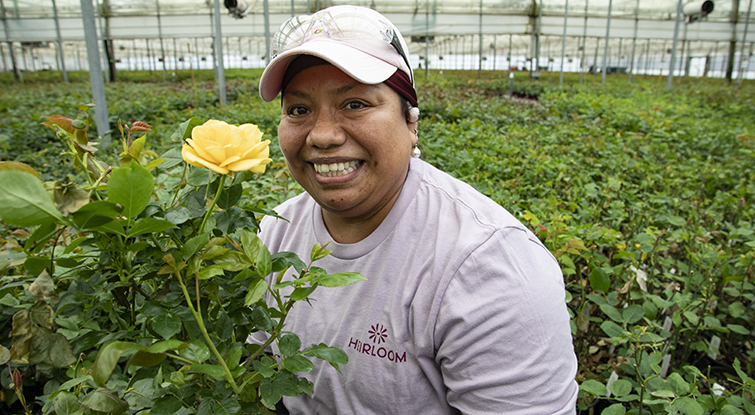
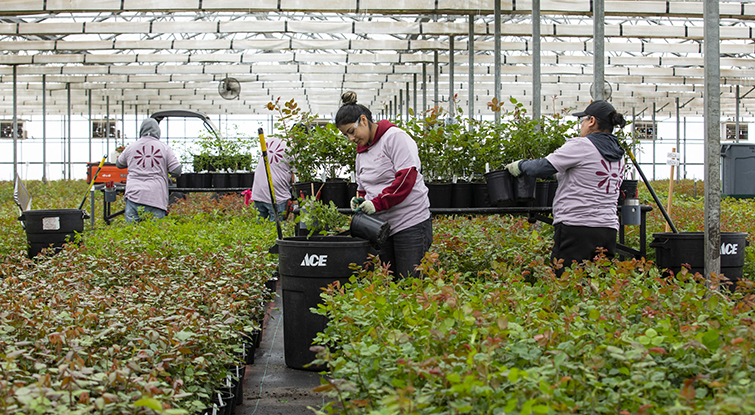
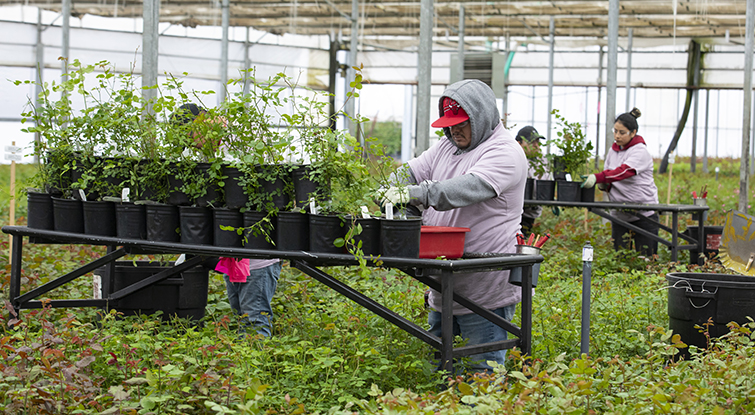
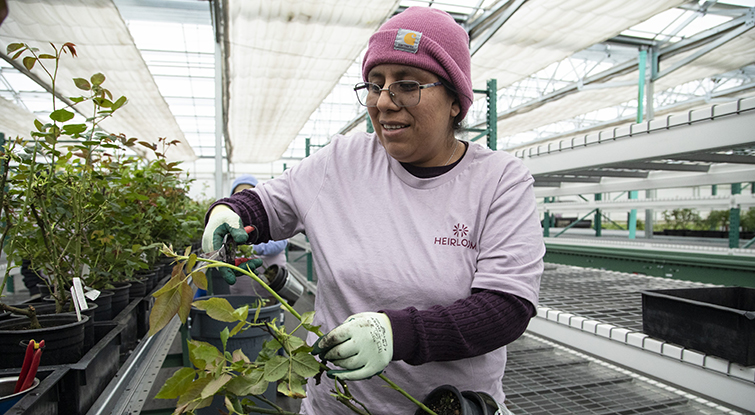
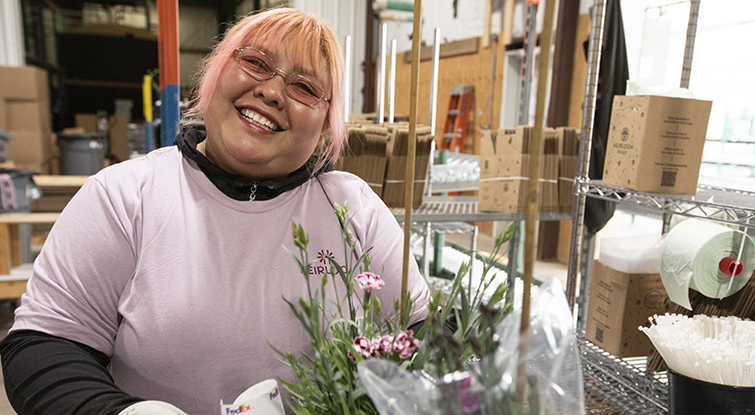
For thousands of gardeners across the U.S. and Canada, their garden dreams begin in two Oregon nurseries in St. Paul and Woodburn.
In these Heirloom™ facilities, more than one million roses of every shape, color, and fragrance sit in one-gallon pots, waiting to be dispatched to eager customers. Originally known as Heirloom Roses, the family-owned company has been propagating, growing, and shipping roses since 1973. It’s earned a reputation for quality roses grown on their own roots instead of being grafted, as well as a commitment to rare and unique varieties.
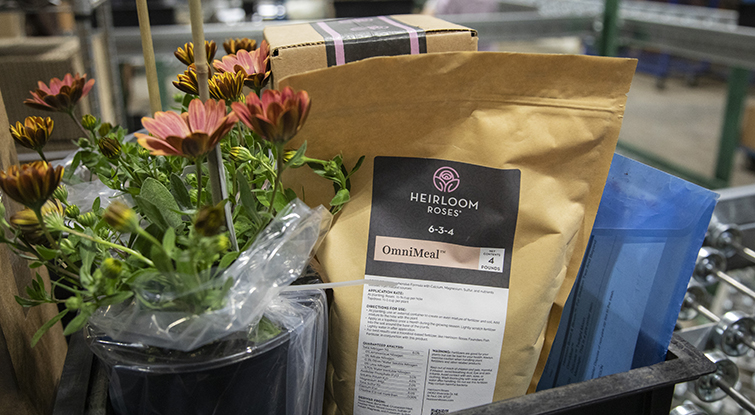
The company recently changed its name to Heirloom to reflect its growing range of products, including perennials from local Oregon nurseries, spring bulbs, and its own line of soil amendments and fertilizers. A year ago, in response to increased demand, Heirloom expanded into a 300,000-square-foot facility in Woodburn that encompasses greenhouses and production, packing, and shipping areas.
Rooted in safety
While roses are exquisite, they pose some unique safety issues. All employees wear safety glasses to avoid getting a rose thorn or cane in the eye. During hot weather, workers in the greenhouses and rose fields take regular rest breaks and drink plenty of water.
“Heirloom takes employee safety and well-being seriously,” says Tyler Spurgeon, vice president of operations. “We put a strong emphasis on ergonomics, stretching, and efficient systems to minimize strain on employees.”
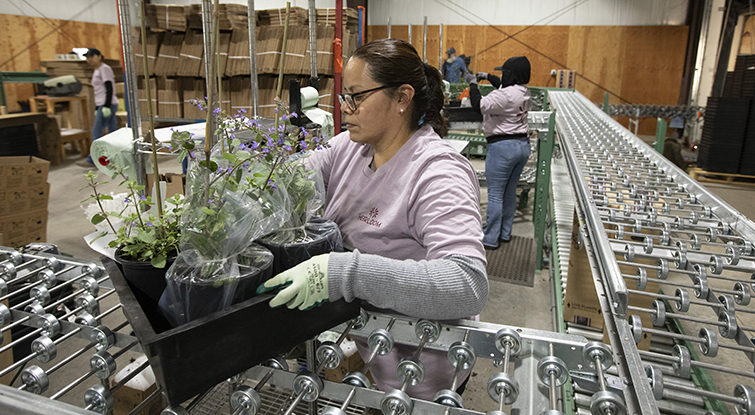
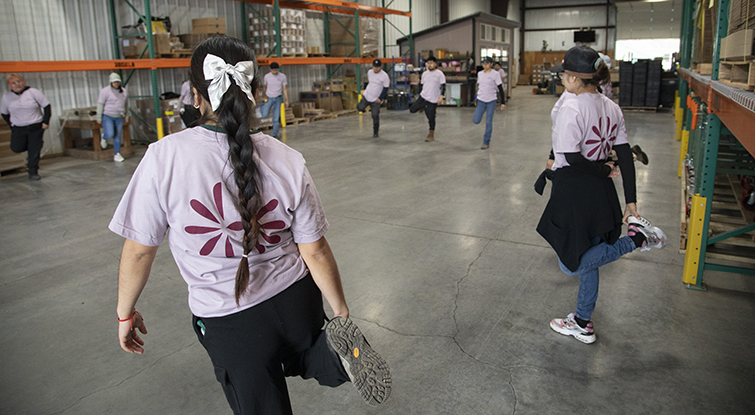
Twice a day, employees gather in a circle and do ergonomic stretches to prevent and release any tension in their wrists, shoulders, and legs. Newly installed gravity-fed and powered conveyor belts in the Woodburn facility make it easy for employees to move heavy pots and cartons around, reducing the amount of lifting and hauling they have to do. Similarly, pickers who select plants from the greenhouse floor place them on rolling carts set at an ergonomically safe height.
Employees using small trucks and wagons drive in a one-way pattern around the facility, avoiding cross-traffic with its potential for injuries. To reduce the risk from emissions from gas-powered equipment in the greenhouses, employees now wear portable carbon monoxide monitors on their clothing.
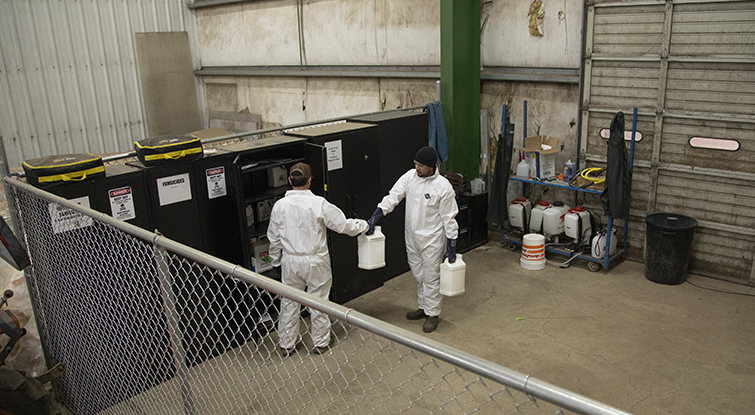
At the suggestion of SAIF senior safety management consultant Hayley Williams, Heirloom enclosed its chemicals in a locked area in the Woodburn facility. “Hayley was a great resource for talking about improvements when we moved into the new facility,” says Spurgeon. “With fungicides, insecticides, and fertilizers, you can’t escape chemicals in a nursery. We want to make it as safe as possible for employees.”
Taking care of workers
Many Heirloom employees stay with the company for years. In another investment in the safety of its workers, the company gives employees who reach their one-year anniversary $200 annually to spend on safety shoes and other gear.
Heirloom also developed an onboarding program for seasonal workers to ensure they’re thoroughly familiar with safety requirements. The company employs 70 full-time permanent workers in operations, marketing, and customer care, but during the hectic spring shipping season, an extra 65 seasonal workers come on board.
In addition to making use of SAIF’s expertise, Heirloom also employs an independent physical therapist and ergonomics safety consultant, Bud Herigstad, who visits the facility once a week so employees can chat about any concerns. He and Williams also attend Heirloom’s monthly safety committee meetings.
Herigstad created the prototype for a metal device that holds a gallon-sized pot and sits on the lip of a trash can or bench. Now manufactured by Heirloom’s facilities department, the spinners position the pot at the correct height and angle. Workers use them to spin the pots around as they carry out any necessary pruning, maintenance, or clean-up. The spinner allows them to work quickly and easily in an ergonomically neutral position, rather than having to hold the pot and reach around it in an uncomfortable or strained way.
Making the world more beautiful
While Heirloom ships products year-round, its busiest season is April to June, when many of the plants leave via FedEx and USPS. Heirloom also sells through Amazon, Walmart, and Costco. Roses and other products make their way across the nation and into Canada, with many heading for the East Coast—a prime market.
In its busy season, the company ships about 3,000 packages and 7,000 roses a day. In a recent innovation, customers can now choose to receive their roses in traditional plastic pots or in new compostable packaging. Another Heirloom innovation is the shipping of roses in a defoliated state—stripped of their leaves to ensure they travel safely and arrive ready to thrive when planted.
Heirloom stocks 900 varieties of roses—from classics like Peace and Mister Lincoln to the world-renowned David Austin “English roses” to new creations from rose hybridizers. As befits its name, the company is partnering with the American Rose Society on the Save the Ramblers initiative to get nearly extinct, historically important ramblers planted in more gardens.
Every day, Heirloom carries out its mission of “Making the world more beautiful, one garden at a time.” Thanks to the company’s dedication to employee safety and well-being, that mission is pursued with care for the people who make it possible.
Learn more about Heirloom at: Heirloom